
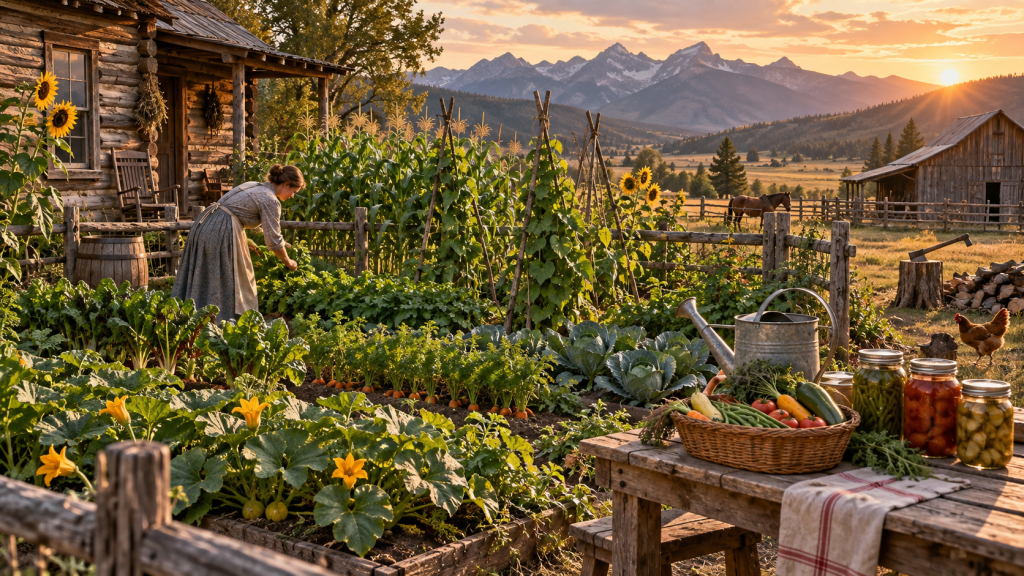
Before grocery stores and refrigeration, a homestead garden wasn’t a hobby, it was the difference between eating and not eating come January. The real history of how frontier families managed that is equal parts clever and, in hindsight, a little terrifying.
Gardens sat close to the kitchen, usually laid out in a tidy four-square plot behind a tight paling fence to keep small animals out, and many homesteaders blended European row-planting with the Native American Three Sisters method, corn, beans, and squash grown together so the beans fed the corn, the corn supported the beans, and the squash leaves choked out the weeds underneath. Practical teamwork, straight out of the ground.
Canning changed everything, and also came with a risk nobody understood yet. The screw-top jar that made it all possible was patented by John Landis Mason back in 1858, and by the 1880s Ball was mass-producing them for home use, meanwhile, Mason himself, the man whose name is on every jar in every frontier pantry in this genre, lost the patent, died broke in a New York tenement, and never saw a dime of it. Families used the “open-kettle” method, boil it, jar it while scalding hot, seal, and hope, with zero concept that a sealed jar could quietly harbor something lethal. Nobody understood the actual danger until the 1920s. Your characters would have had no idea their own pantry could be more dangerous than the trail behind them.
Not every threat was invisible, either. The Rocky Mountain locust plague of 1874 was still fresh in a lot of homesteaders’ memories by the 1890s, swarms so vast they reportedly ate curtains, wagon paint, wool right off a sheep’s back, and, per one settler’s own account, the green stripe straight off the dress she happened to be wearing. Farmers joked afterward that the locusts had eaten everything but the mortgage.
The lighter side of frontier community life balanced all that out. Barn raisings came with a full day of cooking and ended in a dance that could run till dawn, and skipping one without a good reason brought real social side-eye from the neighbors. It’s easy to imagine canning day working the same way, women gathered over a hot stove trading news, recipes, and probably a fair amount of gossip.
Do you keep a garden yourself, or are you more of an admire-from-a- distance type?


Leave a comment